Adobe's Flash Internet Browser plug-in has had so many security issues over the years that many are calling for it to fade into the sunset. For example:
Another major Flash security flaw was uncovered this week prompting Adobe to release an emergency patch. The exploit, along with the story behind its uncovering, is a perfect example of why it's time to abandon Flash once and for all.
...Firefox now blocks Flash content automatically, and the latest nail in the coffin is coming from Facebook's Chief Security Officer Alex Stamos is calling for a kill date where all Web browsers drop support for the multimedia platform at the same time.
Adobe® Flash® Player is a lightweight browser plug-in and rich Internet application runtime that delivers consistent and engaging user experiences, stunning audio/video playback, and exciting gameplay. Installed on more than 1.3 billion systems, Flash Player is the standard for delivering high. Mar 23, 2015 Question: Q: Download Adobe Flash update on Mac with Yosemite I am attempting to install the Adobe Flash update on my Mac Book Pro with.
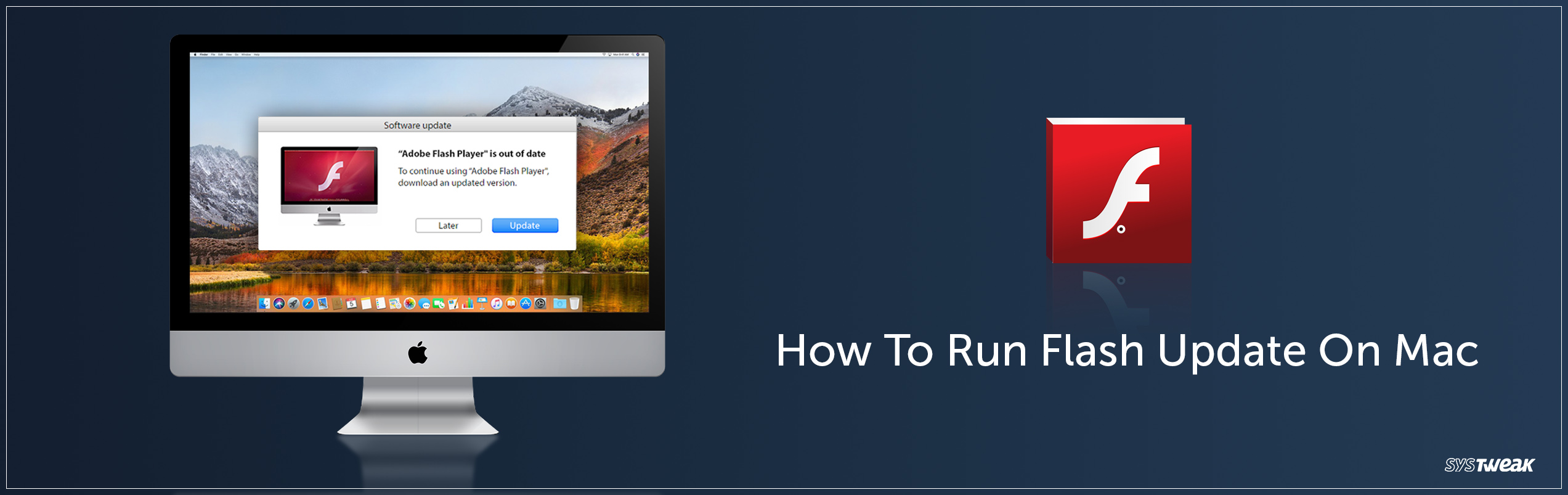
Here at TMO several of us have put our heads together and collected some useful information, an FAQ, on how to check the version you have, uninstall Flash and/or otherwise mitigate Adobe's Flash's security impact on your Mac.
1. How do I know which version of Adobe Flash is installed?
In a Web browser, go to Adobe's Flash Player page. It shows the latest version of Flash for each Platform in a table. It will also echo back to you the version of Flash you have installed.
Check if Flash Player uninstallation is finished. In the wake of running the uninstaller, your framework ought to be free of Flash Player and its related web module. To check that Flash uninstallation has been finished effectively, first restart your Mac by picking Restart in the Apple menu. At that point, open your program and check the status of Flash Player on Adobe’s site.
2. I have to use Flash for certain sites. How do I keep it updated?
When you install Adobe Flash, a Preference Pane is placed in OS X
The download link above will place a .dmg file to your downloads folder, and it contains the installer. Quit your browser before you install.
Page 2 - Managing Flash in your Chrome, Firefox, Safari browser ... or just deleting Flash for good.
3. How can I restrict which sites use Flash in Safari?
If Flash is installed and you can't live without it, you can at least control when it runs in Safari on your Mac. Safari's security settings give site-by-site settings for running or blocking Flash content, and it's easy to set up. Here's how:
Launch Safari on your Mac, the choose
- Click the
- Select Adobe Flash Player from the extensions list.
- Use the pop-up menus in the Currently Open Websites list to set indvidual sites to Allow, Block, or Ask.
You can set a default action for sites that aren't on your list, too, via the When visiting other websites pop-up menu. Ask is a good choice here.
4. How can I restrict when Flash is used in Firefox?
Firefox users can control their Flash settings so they see a prompt allowing them to choose when Flash content runs.

- Launch Firefox on your Mac, then click the Open Menu icon at the far right of the tool bar.
- Choose
- Click
- Set Shockwave Flash to 'Ask to Activate' from the pop-up menu at the right side of the plugin list.
Like Google Chrome, Firefox is now blocking Flash content by default because of the serious nature of current security flaws.
5. How do I uninstall Adobe Flash for good?
There are two ways. First, you can use the OS X Finder and navigate to Macintosh HD/Library/Internet Plug-ins. You'll see two files there.
- flashplayer.xpt
- Flash Player.plugin
As an OS X administrator, move theses two files somewhere else for safe keeping or, optionally, just delete them. (It's easy to reinstall later.) Then restart your browser. Now you are Flash free.
A second way is to download the uninstaller from Adobe. Again, this is a .dmg file. Double-click it to mount, then run the uninstaller it contains. It will ask for an administrator password. Basically, it does the same job removing files described above.
6. Okay, Flash is gone from my Mac. Every once in awhile, I need to look at a site that uses Flash. Do I need to reinstall it?
Actually, you don't need to. If some of the Websites you can't live without require Flash, but you really don't want it installed, Google's Chrome browser may be what you're looking for.
Chrome includes its own built-in version of Flash that's sandboxed, uses a more modern plug-in protocol, shuts itself down when it isn't in use, can pause Flash playback for site content that isn't necessary for pages to display. And when Chrome isn't running, Flash isn't loaded. Chrome also keeps its Flash version automatically updated.
You can also control Flash on a site-by-site basis in Chrome's settings. Here's how:
- Launch Google Chrome on your Mac, then choose
- Click
- Click
- Click
- Click
- Enter the URL for the site you want to explicitly control, then choose Allow, Detect content, or Block from the Behavior pop-up menu.
- Click
Google Chrome isn't, however, the be-all-end-all solution for displaying Flash content. In light of recently uncovered security flaws, Google has disabled Flash playback in Chrome while we wait for Adobe to sort out some of Flash's bigger issues.
Flash Player version 23.0.0.162 and earlier, Flash Player Extended Support Release version 18.0.0.375 and earlier, and Flash Player for Google Chrome version 23.0.0.162 and earlier are affected on macOS Sierra and OS X.
Mac users should update to the latest Flash Player version through the built-in update mechanism, or by visiting the Adobe Flash Player Download Center.
Mac users running Flash Player 11.3.x or later who have selected the option to 'allow Adobe to install updates' will receive the update automatically. Likewise, Google Chrome will automatically update Flash Player to version 23.0.0.185.
Safari on macOS Sierra deactivates Flash by default, only turning on the plug-in when user requested. Chrome, Firefox, and most other modern web browsers also have web plug-in safeguards in place due to repeated security risks.
Similar critical security updates were issued in March, for example, while Adobe released an 'emergency' Flash Player security update in April to address ransomware attacks affecting Flash-based advertisements on Mac and other platforms.
Ransomware is a type of malware that encrypts a user's hard drive and demands payment in order to decrypt it. These type of threats often display images or use voice-over techniques containing instructions on how to pay the ransom.
The latest vulnerabilities, discovered by Palo Alto Networks, Trend Micro, Tencent, and other researchers, could lead to nondescript 'code execution.' Adobe gave the Flash Player updates its top priority rating, meaning that users should update immediately.
(Thanks, rshrugged!)
Guides
Adobe Flash Player Update For Mac
Upcoming
Front Page Stories
Disney+ Will Offer up to Four Simultaneous Streams and 4K Content for $6.99 a Month
Apple Contractors Listened to 1,000+ Siri Recordings Per Shift
3 days ago on Front PageThe Most Interesting Features in Samsung's New Galaxy Note 10+ Flagship Smartphone
3 days ago on Front PageHealth and Activity: What's New in iOS 13
3 days ago on Front PageZENS Unveils AirPower-Like Wireless Charger With 16 Coils to Charge Two Devices Anywhere on Mat
3 days ago on Front PageHomePod Launches in Japan and Taiwan [Updated]
3 days ago on Front PageApple Debuts New iCloud.com Beta Site With Fresh Look, Reminders App
3 days ago on Front PageBose Announces AirPlay 2-Equipped Portable Home Speaker
4 days ago on Front Page